
The long take
A long take (also called a sequence shot) is basically a type of shot that covers a complete sequence. In this sequence there is no editing of different shots, since a single one covers it entirely.
It is worth stressing that the long take has to cover the whole scene in terms of footage; otherwise, despite having shot a long take, it would not really be one, because the scene would have internal editing.
Shots in which the whole scene is filmed but with the intention of cutting certain parts and inserting other shots in the edit are called master shots.
In recent years the term has been distorted to some extent, since its popularity has made its more colloquial use inaccurate: nowadays any long-duration take gets called a long take.
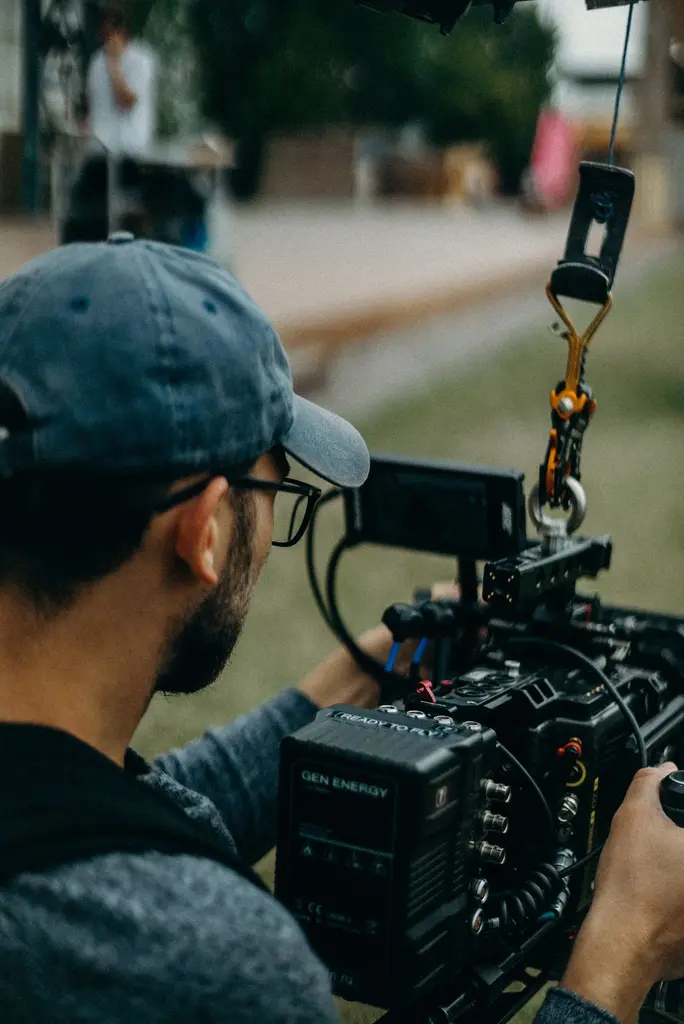
The difficulty of shooting a long take
You will often meet people who, to speed up and simplify a shoot, argue that filming a scene as a long take is the solution. Nothing could be further from the truth.
The reality is that preparing and shooting a long take is a thousand times more complicated than any other shot, and that has to be taken into account.
Everything has to go perfectly because it is a single take: both actors and crew must be one hundred percent in sync and have millimetre-precise coordination.
The fake long take
Over the years, so-called fake long takes began to appear in cinema.
These are nothing more than two or more shots edited one after another so that it feels like the same shot.
Because of how complex long takes are to shoot and their huge impact on the audience, directors began to hide the cut between shots to create the illusion of impossible long takes that are utterly fantastic.
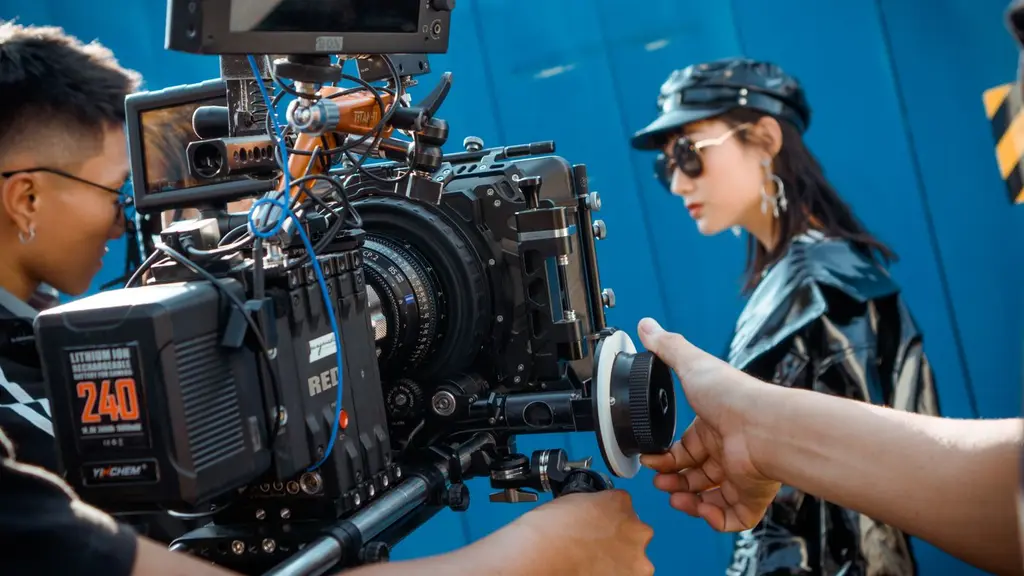
The master shot
As mentioned earlier, the master shot is less about the final edit and more about the techniques that make the editing itself easier.
This classic technique is used as insurance: once the whole sequence is shot as a master, however badly the rest of the shoot goes, you already have that sequence covered with at least one shot.
Another advantage is the large number of takes and reactions you have for the edit: if you shoot every shot of a sequence as a master, you will have the whole sequence from every angle, which speeds up and noticeably improves the editing work.
The best long takes
In this section we list the most iconic long takes in film history, with a brief analysis of each one and why it matters.
1917
1917 is one of the most important films of recent years, with Roger Deakins as director of photography.
The film has a very particular edit that tries to produce the constant effect of a long take throughout the whole film, using the technique known as the “invisible cut”, first used in “Rope” by Alfred Hitchcock.
In this case Roger chose the Arri mini alexa camera, both for its image quality and for its minimal weight, which made it ideal for switching camera support in the middle of a shot and creating more spectacular long takes.
Finally, it is worth highlighting the extensive pre-production carried out to achieve these results. First they built all the sets as scale models so that Sam Mendes could plan the staging and Roger could experiment with the lighting and how it affected the materials and the structures.
After this modelling stage they built the sets and spent more than 4 months rehearsing, both camera and acting.
Birdman
One of the most spectacular films of recent times.
With cutting-edge techniques and shots, Alejandro González Iñárritu tries to make the audience believe that there is no cut throughout the whole film. It is obviously a fake long take spanning the entire running time, given the jumps from day to night.
As in the previous example, this film used the invisible-cut editing technique along with others, such as exhaustive planning of the staging and the camera movements.
▶ Watch on YouTube: Birdman – trailer (Spanish)
“Touch of Evil” long take
One of the most representative long takes in film history. Here Orson Welles uses this type of shot to open the film and, with far more limited, fully analogue means, nothing motorised, manages to create one of the most iconic long takes.
▶ Watch on YouTube: Touch of Evil – opening long take
“The Shining” tricycle long take
This splendid work by Stanley Kubrick, which completely revolutionised cinema, contains one of the most revolutionary, iconic and representative long takes in history.
Who could forget that wonderful sequence in which the camera follows Danny on his tricycle along the hotel corridors, at floor level?
To shoot it, Kubrick relied on the Steadicam, which had made its debut only a few years earlier in “Bound for Glory” (1976). It was operated by its own inventor, Garrett Brown, who developed a low-mode rig for this film so the camera could follow the tricycle close to the floor.
▶ Watch on YouTube: The Shining – tricycle scene
Conclusion
Long takes are those that cover a complete scene. It is important to distinguish them from master shots, and vital to understand that their difficulty is extreme, so they cannot be used as a resource to save a shoot; quite the opposite, they are an element that gives the work greater quality and complexity.