
In photography, the telephoto lens is a type of camera lens designed to frame distant subjects. When paired with a DSLR or another camera that accepts interchangeable lenses, a telephoto lets you capture images of faraway objects with great detail and clarity. But what exactly is a telephoto lens? And how do you use it? Let’s take a closer look.
What is a telephoto lens?
A telephoto lens is a camera lens with a long focal length that lets you capture images of distant objects. Telephoto lenses are often used in sports and wildlife photography, since they let you photograph subjects at a distance without having to physically get close to them.
Telephoto lenses come in different focal lengths, from short ones (85 mm) to super-telephoto ones (from 400 mm upwards).
The focal length of a telephoto lens is measured in millimetres (mm), and the higher the number, the longer the focal length and the greater the magnification. For example, an 85 mm lens will have less magnification than a 200 mm one.
How do you use a telephoto lens?
Telephoto lenses are generally used for two purposes: photographing subjects at a distance and achieving a shallow depth of field.
When photographing subjects at a distance, it’s important to keep your hands as steady as possible to avoid blurry images. One way to do this is to use a monopod or a tripod. If you don’t have either of these, you can try leaning against a wall or another object to use as support.
To achieve a shallow depth of field — that is, the subject in focus while the background is blurred — you’ll need to use a wider aperture setting (a lower f-stop number). This will let more light into your camera, which in turn will let you use a faster shutter speed. A fast shutter speed is important when photographing moving subjects, as it will help avoid blur.
Types of telephoto lens
As a photographer, it’s important to have a variety of lenses at your disposal so you can capture the perfect shot no matter the situation. When it comes to lenses, telephotos are among the most versatile because they let you take photos of subjects that are far away.
Zoom or prime
Prime
The first type of telephoto is the prime lens. Prime lenses have a fixed focal length, which means they can’t zoom in or out. Although this might seem like a drawback, prime lenses have some advantages.
They usually have wider apertures than zoom lenses, which means they let in more light and produce sharper images. They’re also smaller and lighter than zoom lenses, so they’re more portable.
Zoom
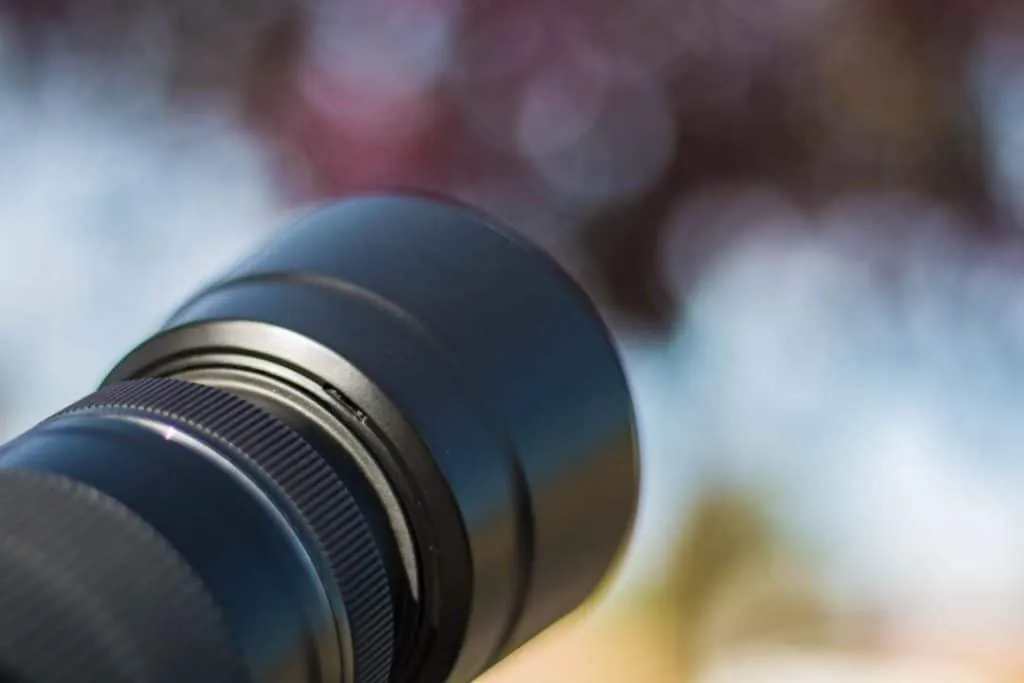
The next type of telephoto is the zoom. Zoom lenses owe their name to their ability to zoom in and out, which gives you more flexibility when framing your photographs. One advantage of zoom lenses is that you don’t have to constantly change position to get the right shot. However, zoom lenses are usually larger and heavier than prime lenses, and tend to have narrower apertures, which means they let in less light.
By focal length
Standard telephoto
A standard telephoto has a focal length that is twice the length of the camera’s field of view. For example, if your camera has a 50 mm field of view, a standard telephoto would have a focal length of 100 mm. Standard telephotos are ideal for portraits, as they let you capture the subject in great detail while keeping a natural perspective. However, if you’re going to photograph landscapes or architecture, you may want to consider a lens with a longer focal length so you can capture more of the scene in the frame.
Long telephoto
Long telephotos have focal lengths that are four times the length of the camera’s field of view or more. So, if your camera has a 50 mm field of view, a long telephoto would have a focal length of 200 mm or more. These lenses are usually used by sports and wildlife photographers who need to capture fast-moving subjects from a distance. Long telephotos are also useful for getting close-ups in tight spaces where it isn’t possible to physically approach the subject.
Super-telephoto
Super-telephotos have focal lengths eight times the length of the camera’s field of view. So, if your camera has a 50 mm field of view, a super-telephoto would have a focal length of 400 mm or more. These lenses are usually used by photographers who need to capture subjects that are very far away, such as birds in flight or animals in the wild. They’re also frequently used by paparazzi and other photographers who need to take candid photos from a distance without being noticed.
What is a telephoto lens used for?
Have you ever wondered how those stunning wildlife or landscape photographs were taken? Most likely the photographer used a telephoto lens.
At this point, we’ll explore what telephoto lenses are, the different types of photography they’re used for and why they’re so beneficial. So if you’ve ever been curious about this type of lens, keep reading!
Wildlife and nature photography
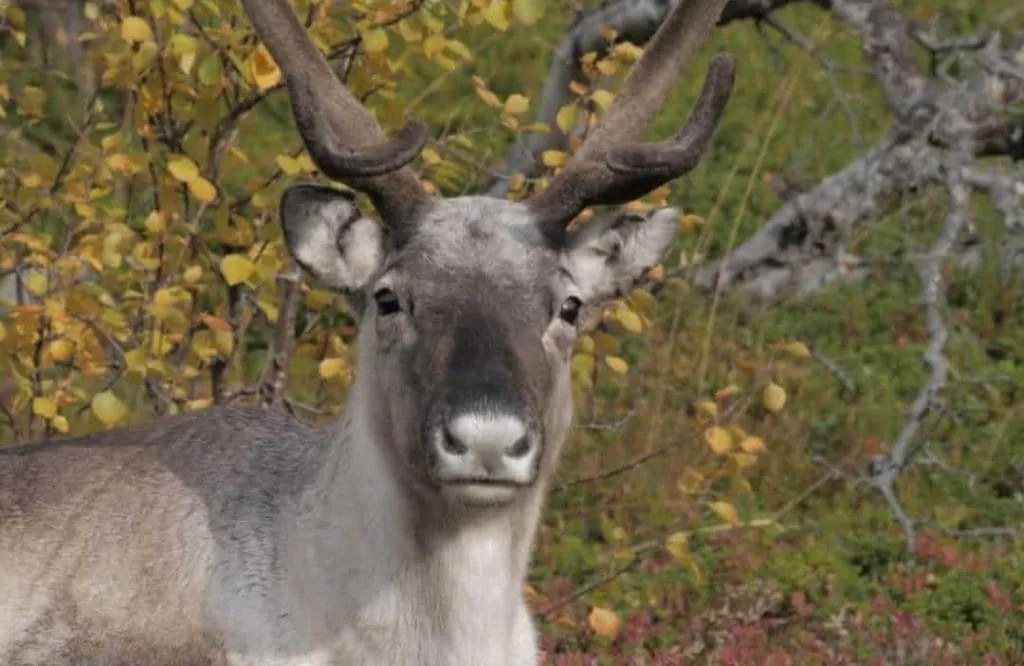
One of the most popular uses of telephoto lenses is wildlife photography. These lenses let photographers capture stunning close-ups of animals in their natural habitat without disturbing them.
For example, a photographer using a 400 mm telephoto can photograph an eagle in flight from over 100 metres away. This not only protects the photographer’s safety but also ensures the animals aren’t disturbed.
Sports photography
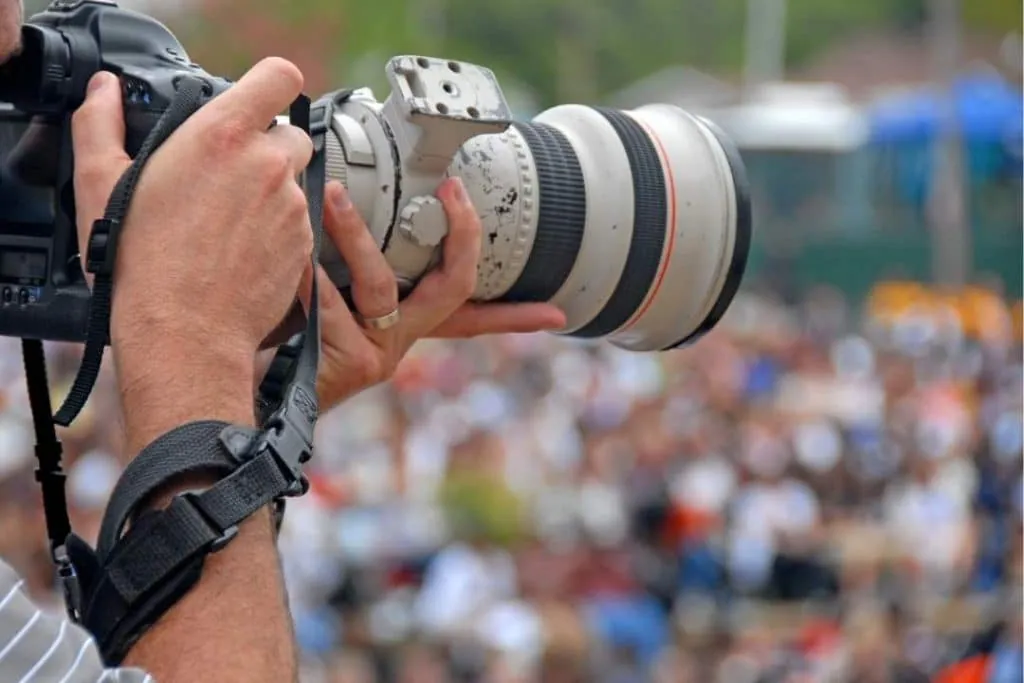
Telephoto lenses are also commonly used in sports photography. These lenses let photographers capture fast-action images from a distance, providing a clear view of the athletes and the game.
For example, when photographing a football match, a 600 mm telephoto will let the photographer capture sharp images of the players from the sidelines.
Landscape photography
In addition to wildlife and sports, telephoto lenses can also be used for landscape photography. These lenses let photographers capture wide views that wouldn’t be possible with shorter focal length lenses.
For example, when photographing mountain ranges or vast open plains, a 200 mm telephoto will provide a sharp, distortion-free image.
Telephoto lenses are versatile tools that can be used for various types of photography. From wildlife to sports or landscape photography, these lenses provide sharp images at a distance without distortion. If you’re interested in exploring any of these genres, we recommend investing in a quality telephoto lens.
How to use a telephoto lens to change depth of field?
A telephoto lens is any lens with a focal length longer than the diagonal measurement of the sensor or film it’s used with. This gives the lens a narrower field of view than a standard lens, which compresses the foreground and background.
This compression can be used to create a sense of distance and depth, or to make a small subject appear large.
There are many different situations in which a telephoto lens can be used. Landscape photographers often use telephotos to compress the foreground and background elements of a scene, which can help create a sense of scale.
But telephotos can also be used for more creative purposes, such as portrait and close-up photography. When used at shorter focal lengths (85 mm or less), telephotos can produce a beautiful bokeh effect — a pleasant blurred-background effect that helps the subject stand out from the rest of the image. And when used at very long focal lengths (200 mm or more), they can produce “miniature” effects in which everything except the subject appears miniaturised due to the extreme compression caused by the long focal length.
There you have it: a brief introduction to using a telephoto lens to change depth of field and stir emotions in the viewer. Next time you go out to shoot landscapes or portraits, try one of these techniques and see how it affects your photos.
The 6 best telephoto lenses and their features
Below we leave you 4 zoom telephotos and 2 prime telephotos to keep in mind if you’re thinking of buying one.
Zoom telephotos
Canon EF 100-400mm f/4.5-5.6L IS II USM
This Canon telephoto is one of the best on the market, thanks to its impressive 100-400mm focal length range and built-in Image Stabilization technology. This lens also features an ultra-quiet Ultrasonic Motor (USM) that makes it ideal for video recording as well as photography.
Nikon AF-S Nikkor 200-500mm f/5.6E ED VR
This Nikon telephoto is a great option for those who want to capture wildlife or sports images. It has a fixed maximum aperture of f/5.6, which may not be ideal for low-light situations, but it more than makes up for it with its impressive 500 mm focal length.
Sony FE 100-400mm f/4.5-5.6 GM OSS
If you’re looking for a high-quality telephoto for your Sony camera, look no further than the FE 100-400mm GM OSS. This lens is perfect for both photography and video thanks to its Optical SteadyShot image stabilization system and its powerful autofocus motor.
Panasonic Lumix G Vario 100-400mm f/4-6.3 ASPH Power OIS
Rounding out our list of the best telephotos on the market. This Panasonic lens is a great option for those who want a versatile all-in-one solution thanks to its 100-400mm focal length range and compact design. It’s also relatively affordable compared to some of the other lenses on our list.
Prime telephotos
Canon RF 600mm f/11
The Canon RF 600mm f/11 is a professional-grade telephoto that offers excellent image quality and great build quality. It features a fast, quiet autofocus system and is compatible with full-frame and APS-C cameras.
It has a maximum aperture of f/11 and a minimum focusing distance of 2.5 m. In addition, it features an Image Stabilization system that reduces camera shake by up to 4 stops.
Nikon AF-S Nikkor 600mm f/4E FL ED VR
The Nikon AF-S Nikkor 600mm f/4E FL ED VR is another great option for professional photographers. It offers excellent image quality and sharpness, as well as fast, accurate autofocus.
It has a maximum aperture of f/4 and a minimum focusing distance of 2 m. It also features a built-in Vibration Reduction system that reduces camera shake by up to 4 stops.
These are the 2 best prime telephotos and their features. Do you have a favourite telephoto? Share your opinion in the comments section below.