
What is depth of field?
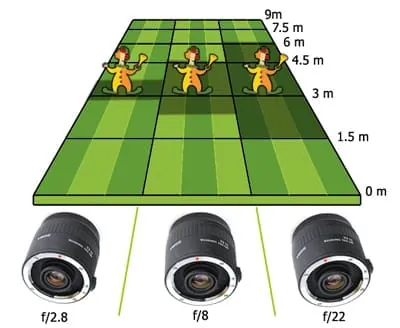
Depth of field is the distance that looks acceptably sharp between objects in a photo or a frame of a film — in other words, the distance that appears in focus. A camera can only focus sharply on a single point. The distance that contains that point is what we call depth of field.
An image with shallow depth is one where only a very small distance is sharply in focus.
An image with deep depth is one where a very wide distance is sharply in focus.
Below we leave you some images so you can grasp this concept more easily.
How to control depth of field in photography
Depth of field in photography is determined by two main things: the focal length and the aperture.
Focal length
The focal length (usually given in millimetres) describes a lens in general terms. Lenses are the optics of photography.
It is not a measure of length but refers to a calculation: the optical distance, that is, the distance between the point where the light rays converge and the camera’s sensor.
The focal length tells us the angle of view — which part of the scene will be captured and how large the individual elements will be. The longer the focal length, the less of the scene is captured and the larger the individual elements appear. Conversely, the shorter the focal length, the smaller the elements appear and the more of the scene is captured.
Once focal length is understood, we can lay out how it affects depth of field:
- The shorter the focal length, the greater the depth — i.e. the less magnification, the more sharp distance we capture.
- The longer the focal length, the shallower the depth of field — i.e. the less of the scene we capture, the less sharp distance we get.
Knowing how focal length affects depth of field, we can use lenses and their focal lengths to change the depth. For example, if we want a very sharp image — that is, a very wide depth — we use a lens with a very short focal length, such as a wide angle. But if we want to reduce the depth, we switch to a lens with a very long focal length, such as a telephoto.
Aperture
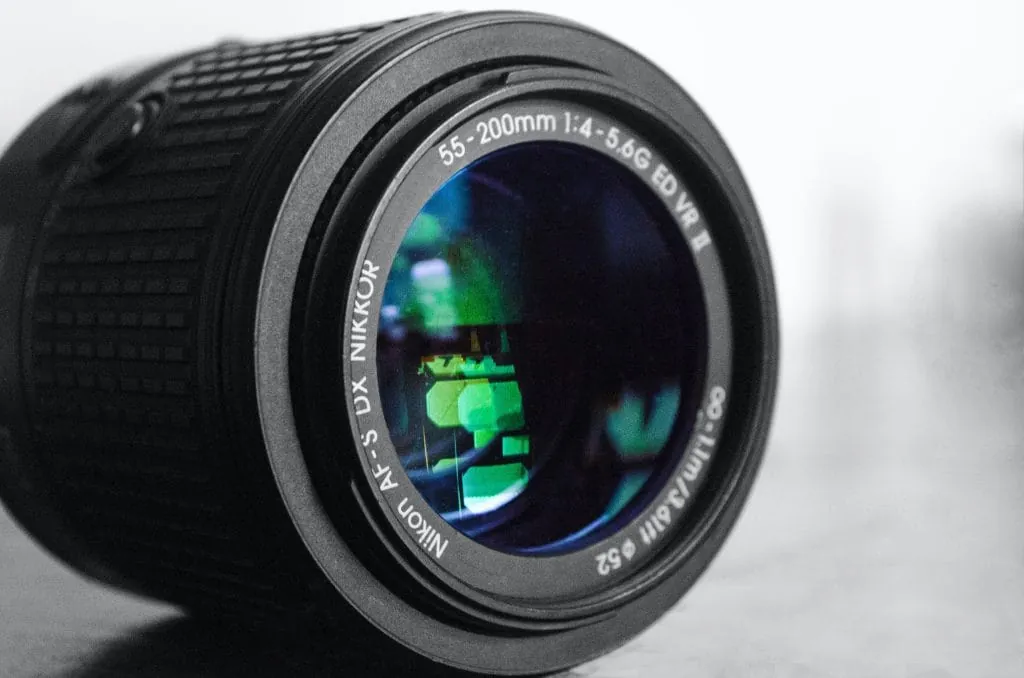
The aperture in photography refers to an opening in a camera’s lens that regulates how much light it lets in when capturing an image.
It is usually represented with the “f” number: the higher the “f” number, the less light the aperture lets through; the lower the “f” number, the more light reaches the camera’s sensor.
This number directly affects depth of field, since the amount of light it lets in changes how much of the scene appears sharp.
- The higher the “f” number, the greater the depth and the more of the scene will be sharp.
- The lower the “f” number, the shallower the depth of field and the narrower the part of the scene that looks sharp.
Once these concepts are understood, we can change the “f” number in our camera settings to adjust the amount of focus we want: to widen the focus we raise the “f” number, and we lower it when we want to narrow the part of the scene that looks sharp.
The narrative of depth of field in photography
Once the technical concepts of depth of field are understood, we can move to the next level and understand what it is used for in storytelling.
Over the years, a whole narrative language has been experimented with and built around depth of field and the amount of focus a frame (or frames) has.
Shallow depth of field
In a scene or sequence with shallow depth of field, narratively it can represent:
- Isolation of a character
- A character’s difficulty fitting into the sequence
- A character’s doubts
- Blurred vision
- Little clarity of thought
- An altered state
- Perception altered by drugs or other causes.
Deep depth of field
When we have a scene or sequence with very wide depth of field, narratively it can represent:
- The character’s self-confidence
- Clarity of ideas
- A concise, fitting vision
- Clear-sightedness
- The character’s full integration into the context or place
These are some of the narrative lines that depth of field influences, but they are not the only ones. It doesn’t even mean it always works this way: a shot with shallow depth doesn’t necessarily imply the character is poorly integrated, has doubts or has altered perception. They are indications that work as a general rule, but narrative is something truly subjective.
Each director or photographer can impose their own narrative rules on their work and attribute different meanings to a lot or a little depth.
At INTI Audiovisual we recommend running your own tests — switching between lenses with different focal lengths and changing the “f” number of the aperture as we’ve shown you — to perceive how depth changes, and from there draw your own conclusions about what it can mean narratively for your work.