
The daguerreotype is a photographic process invented by Louis Daguerre in 1839. In fact, it’s named after him.
The daguerreotype was the first practical photographic process and was used for almost two decades. In this blog post, we’ll talk about what the daguerreotype is, its history, characteristics and how it works.
History and meaning of the daguerreotype
The daguerreotype is a photographic process that creates an image on a silver-coated copper plate.
It was the first commercially successful photographic process.
Basically, it was a large, heavy camera that used a lens to project an image onto a silver-coated copper plate. The daguerreotype process was slow and the image usually came out blurry.
The daguerreotype process was the first photographic process to be publicly announced, and it quickly became popular.
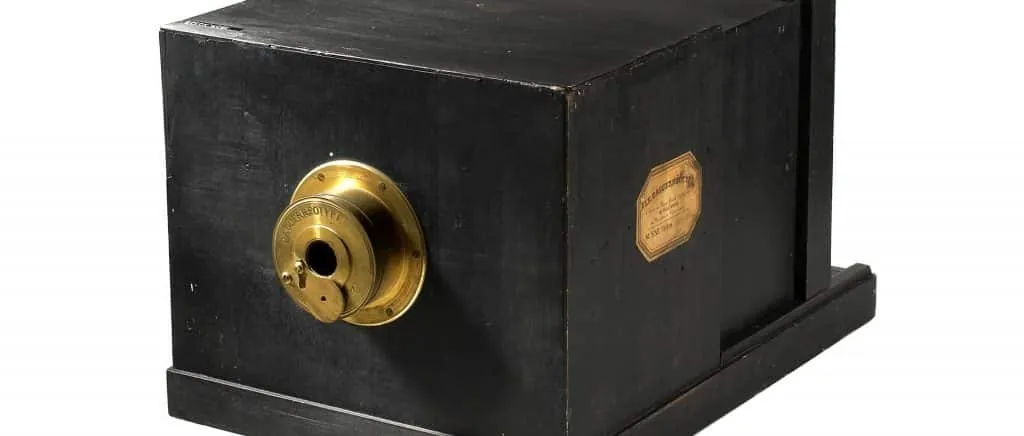
In 1839, the French Academy of Sciences awarded Daguerre and Niépce the Rumford Medal for their work on the daguerreotype. That same year, the French government bought the daguerreotype process from Daguerre and Niépce and made it available to the public.
The daguerreotype camera became very popular in the early 1840s, and many photographers began using it to capture images of the world around them.
One of the most famous photographs taken with one of these is “View from the Window at Le Gras”, captured by Niépce in 1826. This is the oldest surviving photograph and is currently on display at the Harry Ransom Center at the University of Texas at Austin.
It continued to be used into the 20th century, but eventually ended up being replaced by more modern photographic processes. Such as the collodion process.
Despite its flaws, it’s an important part of the history of photography. It was fundamental to the development of modern photography.
The daguerreotype is a reminder of how far photography has come in a relatively short period of time.
How the daguerreotype works
It’s a process that uses mercury vapour to create a latent image on a silver-plated copper sheet. This sheet is then developed with hot oil, revealing the photograph.
Despite its popularity, the daguerreotype had a number of limitations. One of the most important was that this process could only be used to create positive images.
This means that if a photographer wanted to create a negative of an image, they had to do it manually. In addition, the daguerreotype process wasn’t suitable for creating large images.
If what you want is to know how a daguerreotype works to create an image, we’ll tell you; the steps were as follows:
- Cover a metal plate with a thin layer of copper and a light-sensitive coating.
- Place the plate in a daguerreotype.
- Expose the plate to light, so that the light reflects off the surface of the plate and draws an image on the sensitive layer.
- Cover the plate with silver powder and subject it to a chemical process to fix the image on the surface.
- Place the plate in a frame and cover it with glass to protect it.
Once these steps are completed, the resulting image will be a negative copy of the original scene, which can be seen by looking through the metal plate from behind.
Bear in mind that the daguerreotype’s operation was very slow and complicated, and that the resulting image was blurry and fragile. Even so, the daguerreotype was an important advance in the history of photography.
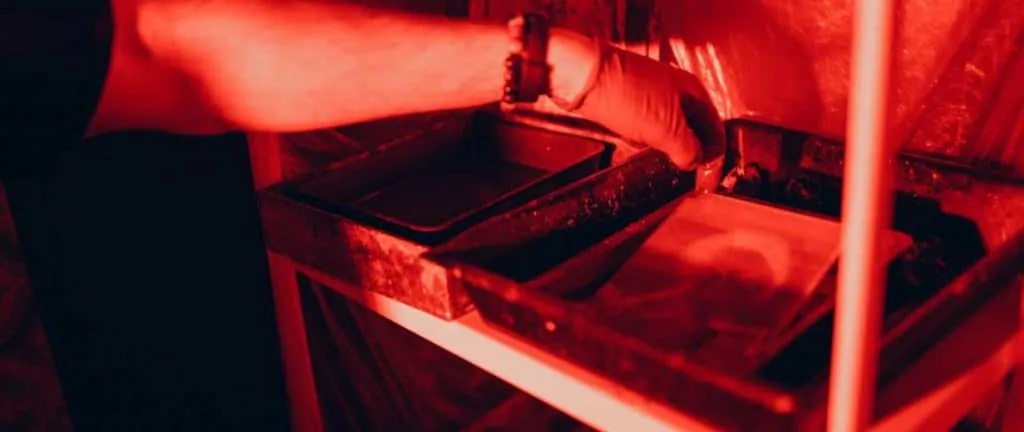
Why use it today
One of the reasons to keep using daguerreotypes today is that they’re a unique type of photography.
They’re one of the first types of photography that existed and they have a certain charm. In addition, daguerreotypes are very durable, so they can endure over time.
Another reason daguerreotypes remain popular is that they can be very valuable. If you have one, it can be worth a lot of money. Therefore, it’s worth keeping it in good condition.
If you’re interested in daguerreotypes, there are a few things you should know about them. First of all, daguerreotypes are very sensitive to light.
Therefore, you have to be careful when handling them.
Secondly, developing photos from a daguerreotype can be difficult. However, if you’re going to use something this old, you probably know what you’re doing.
If you’re interested in learning more about what a daguerreotype is, you can visit a local museum or gallery that has daguerreotypes on display. Seeing a daguerreotype in person is a unique experience.