
The clapperboard is one of the many tools used to make films.
It’s easy to use and can be useful both for professionals and for amateurs who want to go a step further in the world of cinema.
What the clapperboard is for
So, the film clapperboard, also known as a film slate, is a device used in the making of films, series or any other audiovisual production to:
- Mark the beginning and end of each take.
- Identify each scene and each shot.
- Synchronise sound and video during post-production.
- Be used as a guide for video editors.
- Note down the director and the camera operator in charge of that shot or scene.
In addition, clapperboards aren’t just for films or TV shows; still photographers also use them because they’re an interesting way to keep a record of the story. They keep track of where the photos were taken, who took them, which camera was used, and so on.
A brief history
The film clapperboard has been around since the early 20th century, when it was created by director D.W. Griffith and cameraman Billy Bitzer to help them keep track of every shot they filmed on set during the production of their 1912 silent film “The Birth of a Nation”.
This device helped directors identify the takes later on so they could piece the material together into a cohesive whole while editing the final product with the audio sync intact.
Traditionally, they were recorded by closing two pieces of wood together so they made a “clap” sound when opened again.
But the clapperboard has evolved over the years and is now an essential part of film production.
Today, this piece of equipment still helps directors organise scenes visually before calling action.
And since Hollywood films now rely on digital technology, film clapperboards are also used to record the metadata of digital film files.
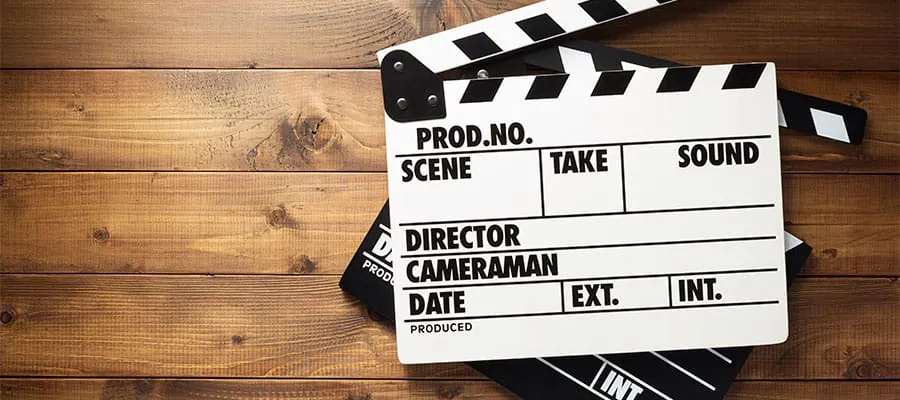
Composition and size of a film clapperboard
It consists of two boards joined together by a hinge. The top board has a movable arm that holds a chalk or whiteboard slate.
The bottom slate has an elastic band holding a piece of slate. The slate has the film’s title, the scene number and the take number printed on it.
The film clapperboard is usually 16 mm thick, although 12 or 20 mm are sometimes used.
The types of clapperboard that exist
There are several types of film clapperboard, among them:
How to fill in the clapperboard information
The clapperboard shows information about the scene and the take number. It includes the film it belongs to, the time of day the take was made, who holds the rights, and so on.
The film’s title is written in large letters so the audience can read it from a distance.
On one side there’s a metal slate where you can write this information with chalk. On this slate there are usually three rows of text and three columns to mark each scene and take number.
It also has the recording date printed on it, although this can vary depending on the studio making the film.
The film clapperboard doesn’t have to show all the film’s information.
Some film clapperboards only have room for scene and shot numbers, while others may also include the camera angle, the weather conditions or the film’s colour information.
How is a clapperboard used?
To use a clapperboard, the most important thing is to first position it towards the film camera so the information is clearly visible.
Hold it with your left hand so that the top edge of the board is facing you.
With your right hand, hold the clapper stick and snap it against the top edge. Make sure to make a loud noise so the sound is picked up by the microphone.
This means that from this moment the film’s time begins and the director can film as much as needed before the film’s time is up.
In some cases, there will be other tools known as “sticks”, one on top of the other, that would produce an audible tone on a film set where there’s no electric clapperboard.
You can even use your own hands to make this clapping sound.